
Retirement accounts are often among the most valuable assets in a Georgia divorce. For many spouses, a 401(k), pension, IRA, or executive retirement plan represents years, or even decades, of work, savings, and long-term financial planning.
Because these assets are governed by both Georgia divorce law and federal retirement regulations, mistakes during the division can be extremely costly. Improper transfers, unclear settlement language, or delays in preparing legal documents can trigger taxes, penalties, or the unintended loss of retirement benefits.
Understanding retirement asset division in Georgia divorce can help you protect your financial future, avoid costly errors, and make informed decisions during negotiations or litigation.
Is Your Retirement Account Considered “Marital Property”?
| Retirement Account Type | Usually Considered Marital Property? | Requires QDRO? | Common Issues |
|---|---|---|---|
| 401K | Marital portion only | Yes | Tax penalties, drafting mistakes |
| Pension | Marital portion only | Usually | Valuation disputes, survivor benefits |
| Traditional IRA | Marital portion only | Usually no QDRO | Incorrect transfer language |
| Roth IRA | Marital portion only | Usually no QDRO | Tax valuation differences |
| Military Retirement | Marital portion only | Special federal rules apply | Survivor benefits, payment timing |
| Government Retirement Plans | Depends on plan | Often | Federal restrictions and agency rules |
| Deferred Compensation Plans | Often partially marital | Sometimes | Vesting schedules and future payouts |
How Georgia Divides Retirement Accounts in Divorce
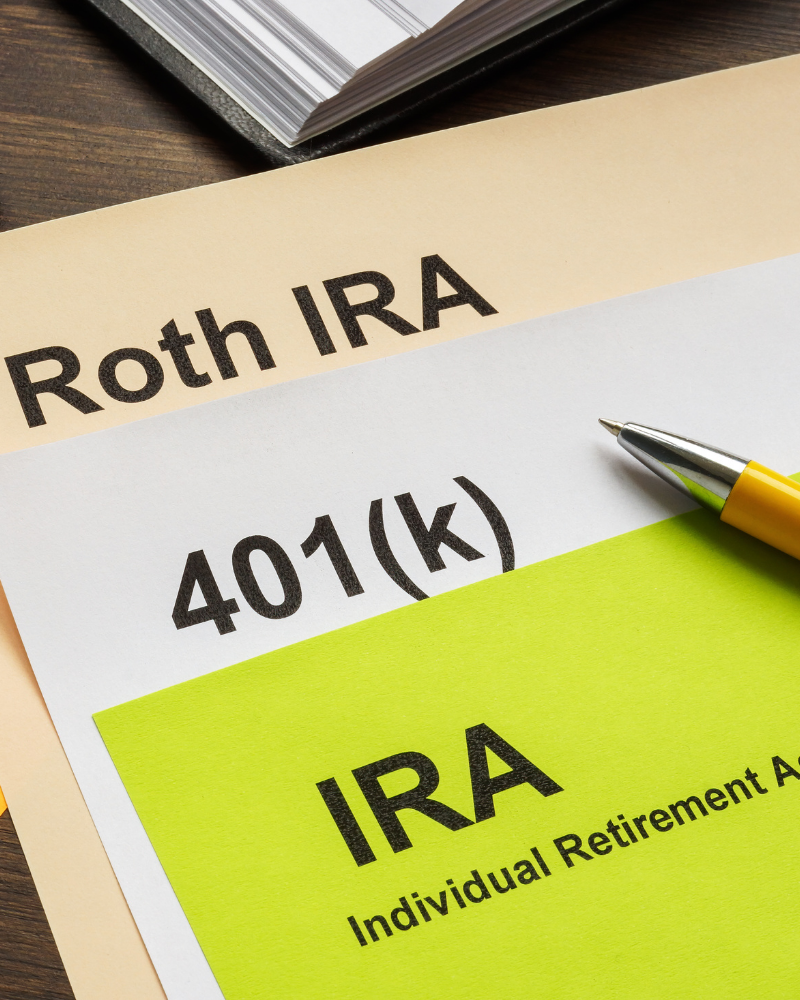 Georgia follows an equitable distribution system. That means marital property is divided fairly, but not necessarily equally.
When retirement accounts are involved, courts may evaluate:
- Length of the marriage
- Each spouse’s financial and non-financial contributions
- Future earning potential
- Age and health of each spouse
- Separate property claims
- Long-term financial needs after divorce
Unlike community property states, Georgia courts are not automatically required to divide retirement accounts 50/50. Instead, the court focuses on what is equitable under the circumstances.
In many high-income and long-term marriages, retirement assets become a major component of the overall financial settlement.
What Portion of a Retirement Account Is Marital Property?
In Georgia, the portion of a retirement account earned during the marriage is generally considered marital property, even if the account is only in one spouse’s name.
This can include:
- 401Ks
- Pensions
- Traditional IRAs
- Roth IRAs
- SEP IRAs
- Deferred compensation plans
- Profit-sharing plans
- Executive retirement plans
- Military retirement benefits
- Government retirement systems
- Stock options
- Restricted stock units (RSUs)
However, contributions made before the marriage are often considered separate property.
Courts frequently evaluate:
- Account balances before marriage
- Contribution history
- Investment growth
- Rollovers between accounts
- Whether marital funds were later added
Without clear financial records, separate property claims can become difficult to prove.
Marital vs. Separate Property Example
| Asset Portion | Usually Marital or Separate? |
|---|---|
| Contributions made before marriage | Usually separate property |
| Contributions made during marriage | Usually marital property |
| Investment growth during marriage | Often partially marital |
| Employer matches during marriage | Usually marital property |
| Post-separation contributions | Depends on timing and circumstances |
How a 401K Is Divided in a Georgia Divorce
Most employer-sponsored retirement plans require a Qualified Domestic Relations Order (QDRO) before funds can legally be divided.
A QDRO is a separate court order instructing the retirement plan administrator how to divide retirement benefits between spouses.
This process allows funds to transfer without:
- Early withdrawal penalties
- Immediate tax consequences
- Violating federal retirement plan rules
Many spouses assume the divorce decree alone is enough to divide a retirement account. In reality, most retirement plans require separate approval through the QDRO process.
How Retirement Accounts Are Typically Divided in a Georgia Divorce
Step 1: Identify All Retirement Assets
Gather information about all retirement-related assets, including 401Ks, pensions, IRAs, deferred compensation plans, military retirement accounts, government retirement plans, and executive compensation structures.
Step 2: Determine the Marital and Separate Portions
Evaluate what portion of each retirement account was earned during the marriage and whether pre-marital contributions can be traced as separate property.
Step 3: Negotiate or Litigate Division Terms
The spouses may negotiate how retirement assets will be divided or present financial evidence to the court for equitable distribution.
Step 4: Prepare Any Required Transfer Documents
Draft and submit Qualified Domestic Relations Orders (QDROs) or other required transfer documents to the retirement plan administrator for approval.
Step 5: Complete the Retirement Asset Transfer
Once approved, retirement assets are transferred in accordance with the final divorce agreement and the applicable retirement plan rules.
Why QDRO Errors Can Be Expensive
Retirement division problems often happen after the divorce is finalized.
Common mistakes include:
- Failing to prepare the QDRO promptly
- Using incorrect account balances
- Omitting survivor benefit language
- Failing to account for gains and losses after separation
- Incorrectly identifying the retirement plan
- Withdrawing funds instead of transferring through a QDRO
Even minor drafting mistakes can delay distribution for months or create substantial financial consequences.
Common Retirement Division Mistakes
| Mistake | Potential Consequence |
|---|---|
| Cashing out a 401K instead of using a QDRO | Taxes and early withdrawal penalties |
| Failing to trace pre-marital funds | Separate property becomes disputed |
| Ignoring future investment growth | Unequal division outcomes |
| Delaying QDRO preparation | Delayed distributions |
| Forgetting survivor benefits | Loss of future retirement payments |
| Using outdated account balances | Inaccurate settlement valuations |
| Ignoring tax consequences | Unequal real-world asset division |
Tax Considerations When Dividing Retirement Accounts
Retirement assets are not all taxed the same way, which makes financial analysis especially important during divorce.
Courts and attorneys may need to evaluate:
- Pre-tax versus post-tax retirement accounts
- Future tax liability
- Early withdrawal penalties
- Required minimum distributions
- Survivor benefits
- Future appreciation and growth
- Capital gains implications
For example, a traditional 401K and a Roth IRA with identical balances may not have the same after-tax value.
A settlement that appears equal on paper may not actually be financially equal once taxes are considered.
Pensions & Long-Term Retirement Benefits
Pensions are often more complicated than standard 401Ks because they may involve:
- Monthly future payments
- Survivor benefit elections
- Cost-of-living adjustments
- Deferred retirement dates
- Vesting schedules
Georgia courts may evaluate pensions using:
- Present value calculations
- Deferred distribution methods
- Negotiated offsets against other assets
Accurately valuing a pension often requires financial analysis and careful legal drafting.
Dividing Military Retirement in Georgia Divorce
Military retirement benefits are governed by federal law under the Uniformed Services Former Spouses’ Protection Act (USFSPA).
These cases involve unique rules regarding:
- Length of military service during marriage
- Direct payment eligibility
- Survivor Benefit Plans (SBP)
- Disability pay exclusions
- Cost-of-living adjustments
- Timing of retirement payments
Military retirement division is significantly more complex than dividing a traditional civilian retirement account.
Government & Executive Retirement Accounts
Government employees, physicians, attorneys, executives, and business owners often have retirement structures beyond a traditional 401K.
These may include:
- Deferred compensation plans
- Stock options
- Restricted stock units (RSUs)
- Executive bonus structures
- Defined benefit pensions
- State retirement systems
- Federal employee retirement systems
These plans may involve restrictions related to vesting schedules, future payouts, and transferability.
In high-asset divorce cases, retirement planning often overlaps with compensation strategy, tax analysis, and business valuation issues.
Important Considerations
- Georgia divides retirement assets using equitable distribution principles.
- The marital portion of a retirement account is usually divisible.
- QDROs are often required for employer-sponsored plans.
- Retirement account mistakes can trigger taxes and penalties.
- Military and government retirement plans are subject to additional federal rules.
- Tax treatment can significantly affect the real value of a settlement.
- Proper documentation is critical for protecting separate property claims.
Frequently Asked Questions
Guidance for Retirement Asset Division in Georgia
Dividing retirement accounts in a Georgia divorce involves far more than simply splitting balances on paper. These cases often require careful analysis of marital property, tax exposure, future benefits, and federal retirement rules.
Hastings Shadmehry Family Law helps clients throughout Georgia protect their financial future during divorce by addressing 401Ks, pensions, executive compensation plans, military retirement benefits, and other complex retirement assets with strategic and detail-oriented representation. Contact us today to schedule a confidential consultation.
